
Audio Flamingo Next Practical Introduction Guide: 30 minutes What changes when you understand audio as a model?
Audio Flamingo Next bundles speech, ambience, and music into a family of open audio language models, targeting 30-minute long inputs and even timestamp-based inference. We have organized into practical standards which team should review it now and how much it should still be considered in the research stage.
Teams that handle long meeting recordings, call center calls, YouTube Live, podcasts, and music analysis always hit the same wall. Speech recognition models are good at transcribing speech but miss background sounds and music context, music analysis models don't understand conversation flow, and often fail to account for timestamps over long periods of audio. Audio Flamingo Next, released by NVIDIA and the University of Maryland, is an attempt to group this problem into one model family. However, not all services need to be integrated into this model right away. Teams where real-time commercial services and commercial licenses are important should consider the conditions first.
Conclusion first
One-line summary: For research and prototyping teams that need to understand long-form audio with evidence, Audio Flamingo Next is one of the most exciting public options right now.
Especially well suited for teams that want to combine question-and-answer, speaker separation, timestamp-based summarization, and music description into one pipeline over 10 minutes or more of audio. Conversely, if your team needs to put it directly into a commercial service or just needs to quickly process a single short speech transcription, Whisper alone or a commercial multimodal API may be simpler. My judgment is this: The real value of AF-Next is not “a chatbot with one more audio” but “an analysis layer that reads long audio based on evidence.”
Decomposition of core structure
One-line summary, AF-Next is easy to understand as a four-stage structure of audio encoder, connection adapter, long language model, and time recognition location expression.
First, the input audio is set to 16kHz mono and then converted to a 128-channel log-mel spectrogram with a 25ms window and 10ms hop. Second, the AF-Whisper encoder reads these in non-overlapping 30-second chunks and turns them into 1280-dimensional features. Third, a second-layer MLP adapter passes audio features into an embedding space where the language model can read them. Fourth, the Qwen 2.5 series 7B backbone reads text and audio prompts together to generate answers.
The important differentiation here is RoTE (Rotary Time Embeddings). While regular positional embedding only looks at token order, RoTE reflects the actual visual information of each audio token. To put it simply, it is a design that makes you more directly remember “at what invitation the event occurred” rather than “how many tokens it was.” Thanks to this structure, AF-Next has the advantage of pinpointing specific scene evidence even from 30 minutes of audio.
Explanation of design intent
One-line summary, AF-Next is not a forced combination of several audio tasks, but a model that directly corrects the existing limitation of not being able to track evidence in long audio.
Many existing audio models are optimized for short clip benchmarks. So, if you ask a question during a 20-minute consultation recording or a meeting with multiple speakers, as in a real service, it is easy to miss important moments and only provide a plausible summary. To solve this problem, AF-Next compiled over 1 million hours of data, approximately 108 million samples, and significantly increased the number of long-form audio and multi-speaker data ranging from 5 to 30 minutes in length.
Another design point is Temporal Audio Chain-of-Thought. This trains the model to describe intermediate inference steps by linking them to audio timestamps. This approach is especially important for audit, review, and research workflows where you want to know “why they made that decision” rather than just the percentage correct. However, there is a price. The model is licensed non-commercially for research use and is not light on resource requirements for long context and inference.
Evidence and comparison
One-line summary, the comparison criteria should be based on understanding long sentences, providing evidence, and multi-task integration rather than simple transcription accuracy.
| Comparison criteria | Audio Flamingo Next | Whisper series only | Closed multimodal API like Gemini 2.5 Pro |
|---|---|---|---|
| Core Personality | Long audio comprehension model for open research | Transcription-centric audio recognition model | Managed universal multimodal service |
| Support range | Voice, ambient sound, music, QA, captioning, inference | Mainly focused on ASR | Extensive but internal structure private |
| Long audio | Up to 30 minutes | Split processing required | Possible, but limited by cost and control |
| Time stamp-based inference | Strong, Think variant provided | Limited | Response is possible, but training method is private |
| Commercial Use | Non-commercial license for research use | Different by model | Commercial contract available |
| Operating Control | High, can be hosted directly | High | Low |
Based on the paper AF-Next significantly outperformed the previous public model in more than 20 benchmarks, and in LongAudioBench, it outperformed Gemini 2.5 Pro in some settings. According to the Hugging Face model card, the default checkpoint is configured assuming a maximum input of 1800 seconds, or 30 minutes. However, it would be difficult to read this straight away as “the best in all audio work.” If all you need is one short call center transcription, Whisper alone may be cheaper and simpler, while if speed to market is important, a managed API can reduce operational burden.
Actual operation flow and step-by-step execution method
One line summary, it is safe to start your first experiment with 3 steps: audio normalization, explicit prompting, and verification of results.
- Input audio arrangement
Unify to mono 16kHz. The hugging face model card is also based on this format. Inserting multi-channel originals as is can lead to performance comparisons being shaky. - Fix the task type first
Specify one of the following: transcription, summary, timestamp Q&A, speaker separation, or music description. For AF-Next, the more specific the prompt, the more stable the results. - Select checkpoint
Review Instruct first for general QA, Think for longer grounded reasoning, and Captioner for detailed explanations. - Long audio verification
See hallucinations and dropout patterns first with 3-, 10-, and 20-minute samples before putting in the full 30 minutes at once. - Evaluation of evidence
A separate sampling inspection is performed to ensure that not only the answer text but also the timestamp matches the actual audio.
from transformers import AutoModel, AutoProcessor
import torch

model_id = "nvidia/audio-flamingo-next-hf"
processor = AutoProcessor.from_pretrained(model_id)
model = AutoModel.from_pretrained(
    model_id,
    torch_dtype=torch.bfloat16,
    device_map="auto",
).eval()

conversation = [[{
    "role": "user",
    "content": [
        {"type": "text", "text": "Transcribe the input audio and mark speaker changes with timestamps."},
        {"type": "audio", "path": "meeting.wav"},
    ],
}]]

batch = processor.apply_chat_template(
    conversation,
    tokenize=True,
    add_generation_prompt=True,
    return_dict=True,
).to(model.device)

if "input_features" in batch:
    batch["input_features"] = batch["input_features"].to(model.dtype)

output = model.generate(**batch, max_new_tokens=1024)
In practice, it should not end here. For example, if it is a meeting summary service, separate verification criteria such as “speaker classification accuracy, important decision omission rate, and evidence agreement rate in sections longer than 10 minutes” must be established. This will help you differentiate between a cool demo and real adoption.
Mistakes and Traps
One line summary, AF-Next fails more easily when you get the evaluation method wrong than performance.
- Pitfall 1, when evaluating only like a warrior model
This model is an integrated model that includes sound, music, and long-form QA. If you only look at the word error rate, you miss the point. A preventive measure is to separately measure ASR, timestamp matching, and question-answering evidence. The recovery method is to redesign the task-specific scorecard. - Pitfall 2, if you interpret 30 minutes of support immediately as one call to actual service
Input length and operating cost are different issues. A preventive measure is to first measure GPU memory, response latency, and missing patterns in 5-minute samples. The recovery method is to separate the palm analysis batch into offline processing and online query answering. - Pit 3, putting it into a commercial product plan without verifying the license
Hugging Face Card Standard This model is for non-commercial research purposes. A preventive measure is to separate the PoC and the product roadmap. The recovery method is to switch to a separately licensable alternative or API when converting to commercial use.
Strengths and limitations
One line summary, very aggressive as a public model, but still clearly limited from a product perspective.
There are three strengths. First, there is a lot of room for pipeline simplification by treating voice, environmental sounds, and music as one series. Second, it puts long-form audio and timestamp inference at the forefront, making it ideal for meetings, media analysis, and forensic reviews. Third, the code, data structure, and checkpoints are made public, making verification and reproduction easy.
The limits are also clear. First, it is a non-commercial license, so it is difficult to put it directly into a commercial product. Second, bias and noise in Internet-scale data remain, so low-resource languages and rare acoustic events may still be vulnerable. Third, long context inference still has large computational and verification costs. Therefore, I think it is more accurate to view AF-Next as a “research reference point that will lead to redesigning the audio analysis product strategy” rather than as an “all-purpose model for immediate service launch”.
Points to study more deeply
One-line summary, to properly understand AF-Next, you need to look at the data design and time expression method rather than the model name.
- How RoTE is different from existing RoPE and why it is important for audio inference with a long time axis
- AF-Next-Which variant is suitable for which task among Instruct, Think, and Captioner
- How well benchmarks such as LongAudioBench and MMAU-Pro match actual product needs
- How to change multi-speaker ASR, timestamped captioning, and music description evaluation into service KPI
- How to compare total cost of ownership between Whisper standalone, closed API, and AF-Next direct hosting
Implementation checklist and author's perspective
One-line summary, before introduction, purpose of use and license boundaries must be organized before model performance.
- Is it clear whether our team's core task is simple transcription or understanding long audio?
- Does the timestamp evidence lead to actual business value
- Does the current project purpose be met with a non-commercial research license
- Has sample verification been completed for more than 10 minutes within the GPU memory and latency budget?
- Is the operational benefit of combining speaker separation, summarization, and music description into one model clear?
- Are there any plans to manually inspect quality degradation and hallucination patterns by audio length?
Definition of Done: The decision to adopt is complete when the timestamp basis, key information omission rate, and operating cost are verified together in three or more representative scenarios and the reason for adoption is explained in numbers compared to the existing pipeline.
My recommendation is this. If you are a research team, media analysis team, or startup preparing for long-form audio QA, AF-Next is worth using as a benchmark right now. However, if a commercial launch schedule is imminent and licensing risks must be avoided, it is safer to leave AF-Next for exploration and internal comparative testing rather than for production. If you only need a short transcription automation, there is no reason to carry this weight.
Reference material
- AI Times, NVIDIA launches ‘Audio Flamingo Next’ capable of integrated understanding of voice, sound, and music (2026-04-15)
- arXiv, Audio Flamingo Next: Next-Generation Open Audio-Language Models for Speech, Sound, and Music (2026-04-14)
- Hugging Face, nvidia/audio-flamingo-next-hf model card
- GitHub, NVIDIA/audio-flamingo code repository
- Audio Flamingo Next project page
PUT THE IDEA TO WORK
Practical AI tools
Turn a technical decision into a transparent estimate, capacity plan, or evaluation check. No signup required; your inputs stay in your browser.
Explore the free tools →Share this article
Related articles
OpenJarvis Installation Guide 2026: Official Commands, Permission Boundaries, and How to Select a Local AI Agent
Based on the OpenJarvis official repository and documentation, we have summarized how to safely install, verify, and stop. We also determine cases where local execution is appropriate and cases where a cloud or simple local model runtime is better.
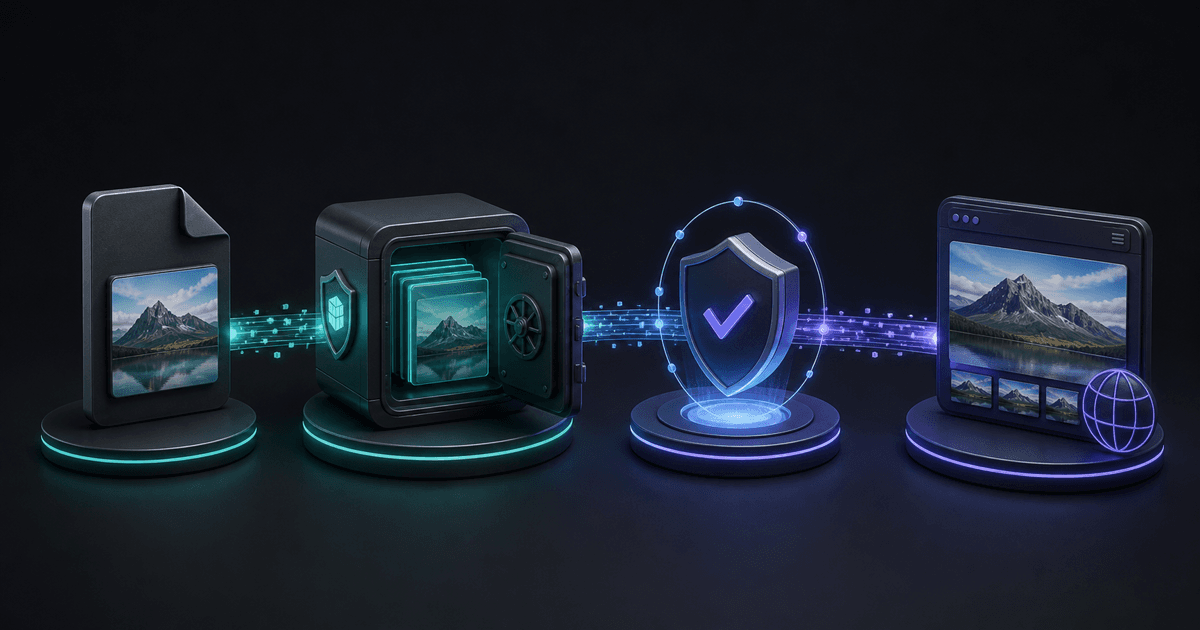
AI Image Provenance Workflow: C2PA, Watermarks, and Human Review
Build an evidence-first image-provenance workflow with original-file retention, C2PA validation, watermark signals, public labels, and a human review path. Use it when an absent signal must remain unknown rather than become a verdict.
Wind Power Forecasting for Operations: Build a Decision Ledger Before You Add AI
A control-first guide to turning wind forecasts into scheduling decisions: issue-time snapshots, uncertainty bands, availability labels, review rules, and safe fallback.
Take the AQ test
See your AI capability in three minutes. Assess recognition, utilization, verification, integration, and ethics at once, then receive practical insights.
Start the free AQ test